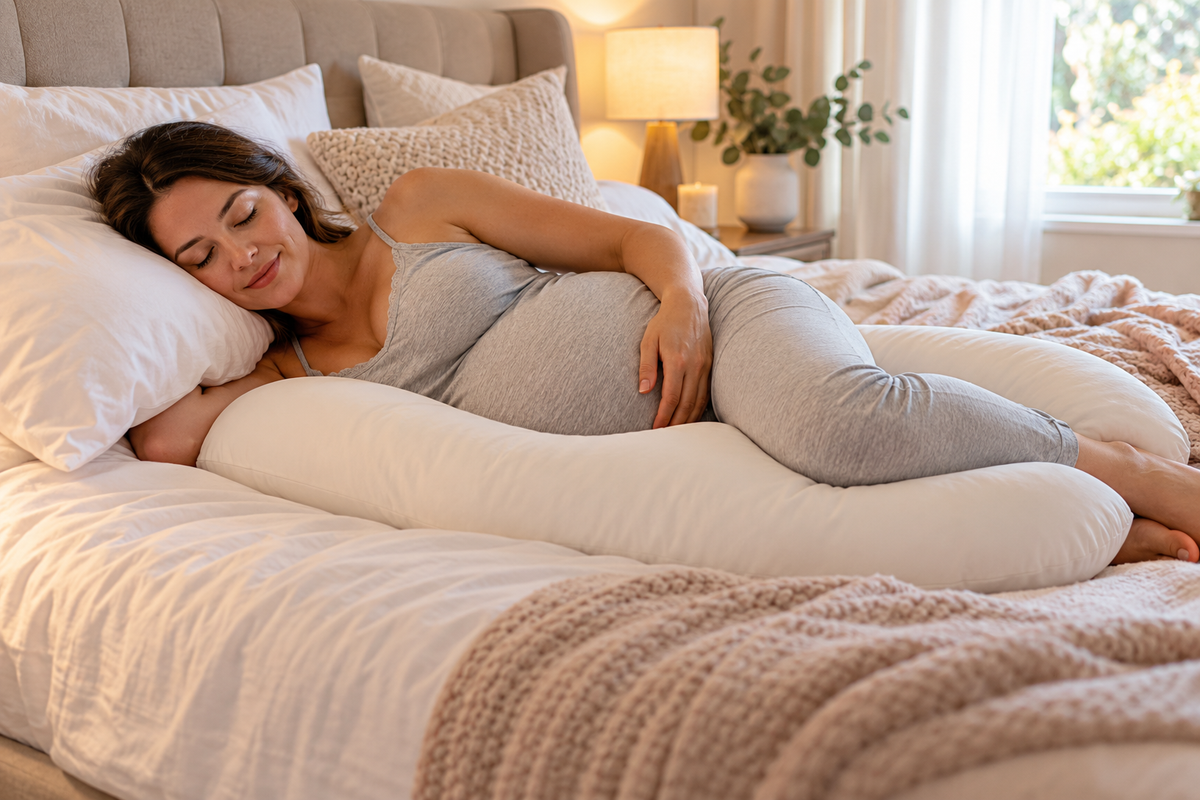
Sleep is one of the first things to change when you are expecting. Between a growing belly, heartburn, night-time bathroom trips and a mind full of questions, getting a full night of rest can feel like a distant memory. If you have typed "how to sleep while pregnant" into a search bar at 3 a.m., you are far from alone. Studies of pregnant women consistently show that sleep problems become more common as pregnancy progresses, and the good news is that a few small changes can make a real difference.
This guide walks you through the best sleeping positions for each trimester, how to use pillows for support, and practical habits that help you fall asleep and stay asleep. It is general information and not a replacement for advice from your own doctor or midwife.
Why Sleep Gets Harder During Pregnancy
Your body is doing remarkable work, and that shows up at bedtime. Common reasons for restless nights include:
- Hormone changes. Rising progesterone can cause daytime sleepiness but also lighter, more broken sleep at night.
- A growing belly. As your bump grows, finding a comfortable position gets harder, especially in the third trimester.
- Heartburn and reflux. Pressure on the stomach can push acid upward when you lie flat.
- Frequent urination. Your baby presses on your bladder, so night-time bathroom trips become routine.
- Leg cramps and back pain. Extra weight and changing posture can strain your hips, lower back and calves.
- Anxiety and vivid dreams. It is very normal to feel nervous about labor and life with a newborn.
The Best Sleeping Position During Pregnancy
The most commonly recommended position in pregnancy is side sleeping, and many healthcare providers suggest the left side in particular. Lying on your side helps keep pressure off the large blood vessels that carry blood back to your heart, and it is generally comfortable for your back and hips.
First trimester
In early pregnancy, most positions are fine, including sleeping on your back or stomach if that is what feels comfortable. This is a good time to start practicing side sleeping so it feels natural later on. Tender breasts and nausea can make sleep tricky, so a supportive, well-fitted sleep bra and a small snack before bed may help.
Second trimester
As your belly begins to show, start moving toward side sleeping. Many people find that a pillow between the knees keeps the hips aligned and eases lower back pressure. If you wake up on your back, do not panic. Simply roll onto your side and settle back to sleep.
Third trimester
Later in pregnancy, many providers recommend avoiding lying flat on your back for long stretches, since the weight of the uterus can press on blood vessels. Aim to fall asleep on your side, and use pillows to make that position easy to hold all night. If you wake up on your back, just shift over. Your body usually gives you a natural nudge when a position feels uncomfortable. Talk to your doctor or midwife if you have specific concerns about your sleeping position.

How to Use Pillows for Better Pregnancy Sleep
Pillows are the simplest tool for comfortable pregnancy sleep. You do not need anything complicated, but the right setup can take pressure off your hips, back and belly.
- Between the knees. Keeps your hips and spine in a neutral line and reduces lower back strain.
- Under the belly. A small wedge or folded pillow supports the weight of your bump and eases pulling in the abdomen.
- Behind your back. A pillow tucked behind you makes it easier to stay on your side without rolling onto your back.
- Under your head and shoulders. Raising your upper body slightly can help with heartburn and stuffy noses.
Many expecting parents prefer a single full-length body pillow, such as a U-shaped maternity pillow or a pregnancy pillow, because it supports the back, belly and knees at the same time. Whatever you choose, comfort is what matters most: if it helps you stay relaxed on your side, it is doing its job.
Simple Habits for Better Sleep While Pregnant
- Keep a steady routine. Going to bed and waking up at similar times helps your body settle into a rhythm.
- Limit fluids in the evening. Drink plenty of water during the day, then taper off a couple of hours before bed to cut down on bathroom trips.
- Watch caffeine. Follow your provider's guidance on caffeine and try to avoid it in the afternoon and evening.
- Eat smaller evening meals. Big or spicy dinners can worsen heartburn. Try eating earlier and keeping your head slightly raised.
- Gentle movement. Light walking or prenatal stretching during the day can ease leg cramps and improve sleep. Ask your provider which activities are right for you.
- Create a calm bedroom. Keep the room cool, dark and quiet, and put screens away 30 minutes before bed.
- Try a wind-down ritual. A warm (not hot) shower, slow breathing or a few pages of a book can tell your body it is time to rest.
- Rest when you can. A short daytime nap can help if nights are rough, as long as it does not push bedtime too late.
Frequently Asked Questions
Is it safe to sleep on my back while pregnant?
Occasionally waking up on your back is very common and is not a reason to worry. In later pregnancy, many providers recommend falling asleep on your side and adjusting if you wake up on your back. Ask your own provider for personal guidance.
Why is the left side often recommended?
Sleeping on the left side is often suggested because it can support healthy circulation. Sleeping on the right side is also generally considered fine, so choose the side that feels most comfortable.
What if I still cannot sleep?
Persistent insomnia, loud snoring, restless legs, or severe heartburn are worth mentioning at your next prenatal visit. There are safe ways to help, and your provider can rule out anything that needs attention.
When should I call my doctor?
Contact your healthcare provider if you have sudden swelling, severe headaches, vision changes, decreased baby movement or anything that worries you. Trust your instincts.
This article is for general information only and is not medical advice. Always talk with your doctor or midwife about your own health and pregnancy.
Ready to sleep more comfortably? Our U-shaped maternity pillow supports your back, belly and knees all at once, so staying on your side feels easy.