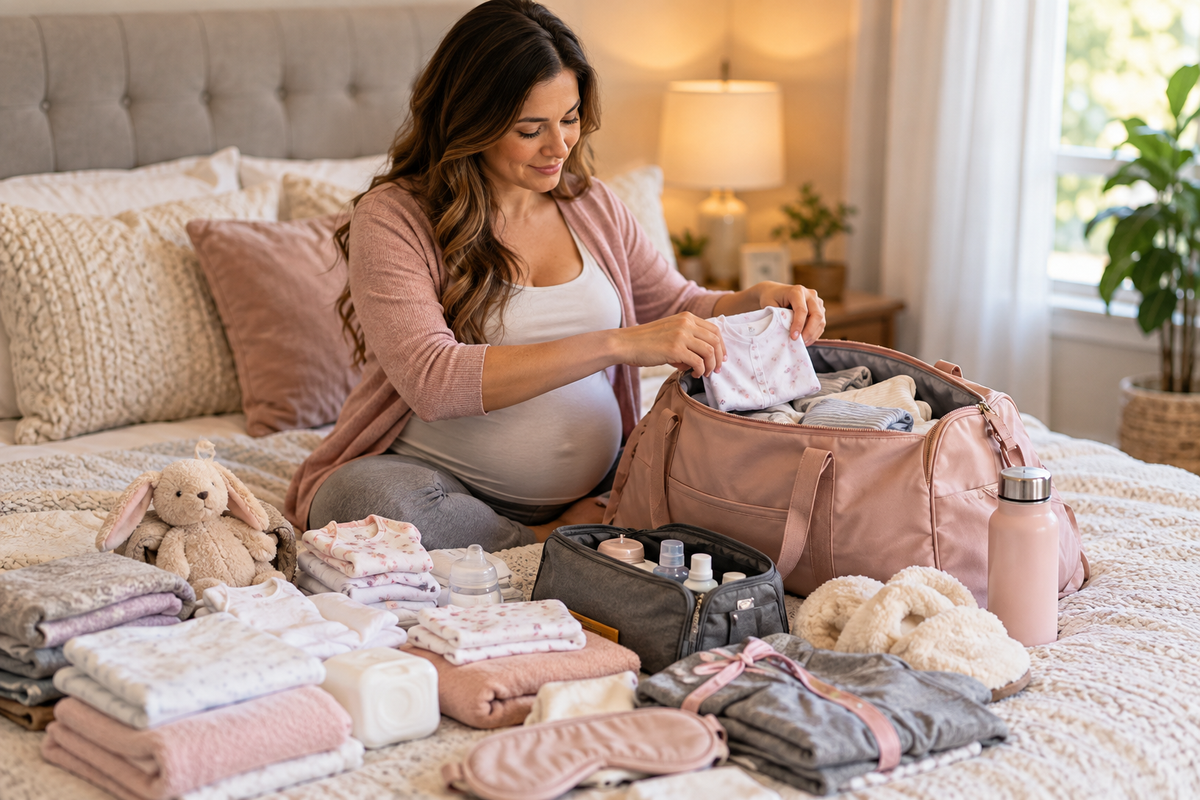
Somewhere around the third trimester, most expecting parents start asking the same question: what actually belongs in a hospital bag? A good hospital bag checklist takes the guesswork out of packing so you can focus on getting ready to meet your baby instead of scrambling for chargers and socks between contractions.
Every hospital and birth center is a little different, and every parent has their own priorities, but the essentials below cover what most moms, babies, and support people actually use during a labor and delivery stay. Use this as a starting point, then tailor it to your own birth plan, your hospital's policies, and how long you expect to stay.
When Should You Pack Your Hospital Bag?
Most obstetric providers suggest having your bag ready by 35 to 36 weeks of pregnancy. Babies don't always follow a due date, and labor can start earlier than planned, so packing a few weeks ahead gives you one less thing to think about. Keep the bag near the door or in your car trunk once it's packed, and let your support person know exactly where it is.
If you're being induced or have a scheduled cesarean birth, you'll usually have a firm date to work backward from, which makes timing a little easier. Either way, a written hospital bag checklist helps make sure nothing gets left behind in the rush.
It also helps to think about your bag in three parts: one for you, one for your baby, and one for whoever is supporting you through labor. Packing them as separate, clearly labeled bags (or packing cubes inside one larger bag) makes it much easier for a tired partner or nurse to find what's needed at 3 a.m.
Hospital Bag Checklist: What to Pack for Mom
Documents and Paperwork
- Photo ID and insurance card
- Hospital pre-registration paperwork, if provided
- Your birth plan, if you have one, along with a copy for your care team
- Pediatrician contact information for your baby's first checkup
Comfort Items for Labor
- Your own pillow with a distinctive pillowcase, so it doesn't get mixed up with hospital linens
- Lip balm and a refillable water bottle, since hospital air can be very drying
- Comfortable socks with grip soles for walking the halls during early labor
- A phone charger with a long cord, plus a portable speaker or headphones for a calming playlist
- Snacks for your support person (many hospitals limit food for the laboring parent, but policies vary)
- A hair tie or headband to keep hair out of your face
Comfort Items for Postpartum Recovery
Once your baby arrives, you'll likely spend one to three nights recovering, so pack a few things that make that stretch more comfortable. A soft, nursing-friendly nightgown is one of the most useful items in any hospital bag, since it makes late-night feedings simpler than digging through hospital gowns. The Postpartum Sleep Dress is designed with nursing access built in, which many new moms appreciate during those first hazy nights.
A supportive belly wrap can also help you feel more secure when you start moving around again. If you already used a Maternity Support Belt in late pregnancy, it's worth packing for the postpartum period too, since many styles double as gentle abdominal support after delivery (always check with your care team before using one after a cesarean birth).
Other helpful comfort items include:
- Loose, comfortable clothes to wear home (think one size up from your pre-pregnancy wardrobe)
- A robe or cardigan for hallway walks
- Your own toiletries: toothbrush, shampoo, deodorant, and any skincare you can't do without
- Nursing pads and a well-fitting nursing bra, if you plan to breastfeed
- Comfortable, high-waisted underwear (a few sizes larger than usual)
- Flip-flops for the shower

What to Pack for Baby
Most hospitals provide basics like diapers, wipes, and a receiving blanket for your stay, but you'll want your own things for the trip home.
- A going-home outfit in newborn and 0-3 month sizes, since you won't know your baby's size until birth
- A soft blanket for the car ride home
- A properly installed, rear-facing infant car seat (most hospitals will check this before discharge)
- A few extra diapers and a small pack of wipes, in case you need them before hospital supplies are restocked
- A hat to help baby stay warm
- A pacifier, if you plan to offer one and your hospital doesn't provide your preferred brand
Because you won't know your baby's exact size until they arrive, it's smart to pack both newborn and 0-3 month sizes of the going-home outfit and pack of onesies. Babies born on the larger side often skip newborn-size clothing entirely, while smaller babies may swim in 0-3 month items for the first few weeks. Layering is also useful, since hospital rooms and car temperatures can vary quite a bit from the weather outside.
What to Pack for Your Partner or Support Person
Labor can take longer than expected, so your support person needs supplies too:
- A change of clothes and a light jacket, since hospital rooms can run cold
- Snacks and cash or a card for vending machines and the cafeteria
- A phone charger and entertainment for long waits
- Toiletries and a pillow, in case they're staying overnight
- A list of people to call once baby arrives, so they're not trying to remember it in the moment
Hospital Bag Packing Tips
- Use packing cubes or separate bags for mom, baby, and partner items so nothing gets lost in one big bag.
- Pack a smaller "labor bag" with just the essentials you'll want immediately (phone charger, lip balm, socks) so you're not digging through everything during active labor.
- Leave valuables at home. Hospitals aren't responsible for lost jewelry or large amounts of cash.
- Check your hospital's specific guidance. Some provide a suggested checklist during a pre-registration tour or class, and policies on food, visitors, and belongings vary by hospital.
- Do a test pack a week or two before your due date so you can adjust if the bag feels too heavy or something important doesn't fit.

Frequently Asked Questions
How early should I pack my hospital bag?
Most care providers recommend packing by 35 to 36 weeks, since babies can arrive before their due date. Packing early takes one task off your list during the final stretch of pregnancy.
What should I NOT pack in my hospital bag?
Leave expensive jewelry, large amounts of cash, and anything irreplaceable at home. You also don't need to pack a full newborn wardrobe, since your baby will likely wear hospital-provided items for most of the stay.
Does the hospital provide diapers and wipes?
Most hospitals supply a basic amount of diapers, wipes, and formula if needed during your stay, but it's smart to bring a small backup supply and your preferred brand if you're particular about it.
Do I need to bring my own car seat?
Yes. Hospitals require a properly installed, rear-facing infant car seat before they'll discharge you and your baby, so have it installed and ready well before your due date.
What should I pack for a scheduled C-section?
Pack the same essentials as a vaginal birth, plus loose, high-waisted clothing that won't rub against your incision, and ask your care team about any additional post-surgical items they recommend.
How many outfits should I pack for the baby?
Two to three going-home outfits in different sizes (newborn and 0-3 months) is usually plenty, since the hospital typically provides onesies and swaddles for the rest of your stay. It's better to pack a small, versatile selection than an entire wardrobe.
Should I bring my own pillow to the hospital?
Many moms find it comforting to bring their own pillow for labor and recovery, especially with a colorful or patterned pillowcase so hospital staff can easily tell it apart from hospital linens when changing sheets.
This article is for general information only and is not medical advice. Always talk with your doctor or midwife about your own health and pregnancy.
Getting your hospital bag ready is one of the easiest ways to feel calm and prepared as your due date approaches. If you're looking for a soft, nursing-friendly nightgown to add to your bag, take a look at our Postpartum Sleep Dress.